Lecture de notes
Apprenez à reconnaître les notes de musique et les accords sur une portée
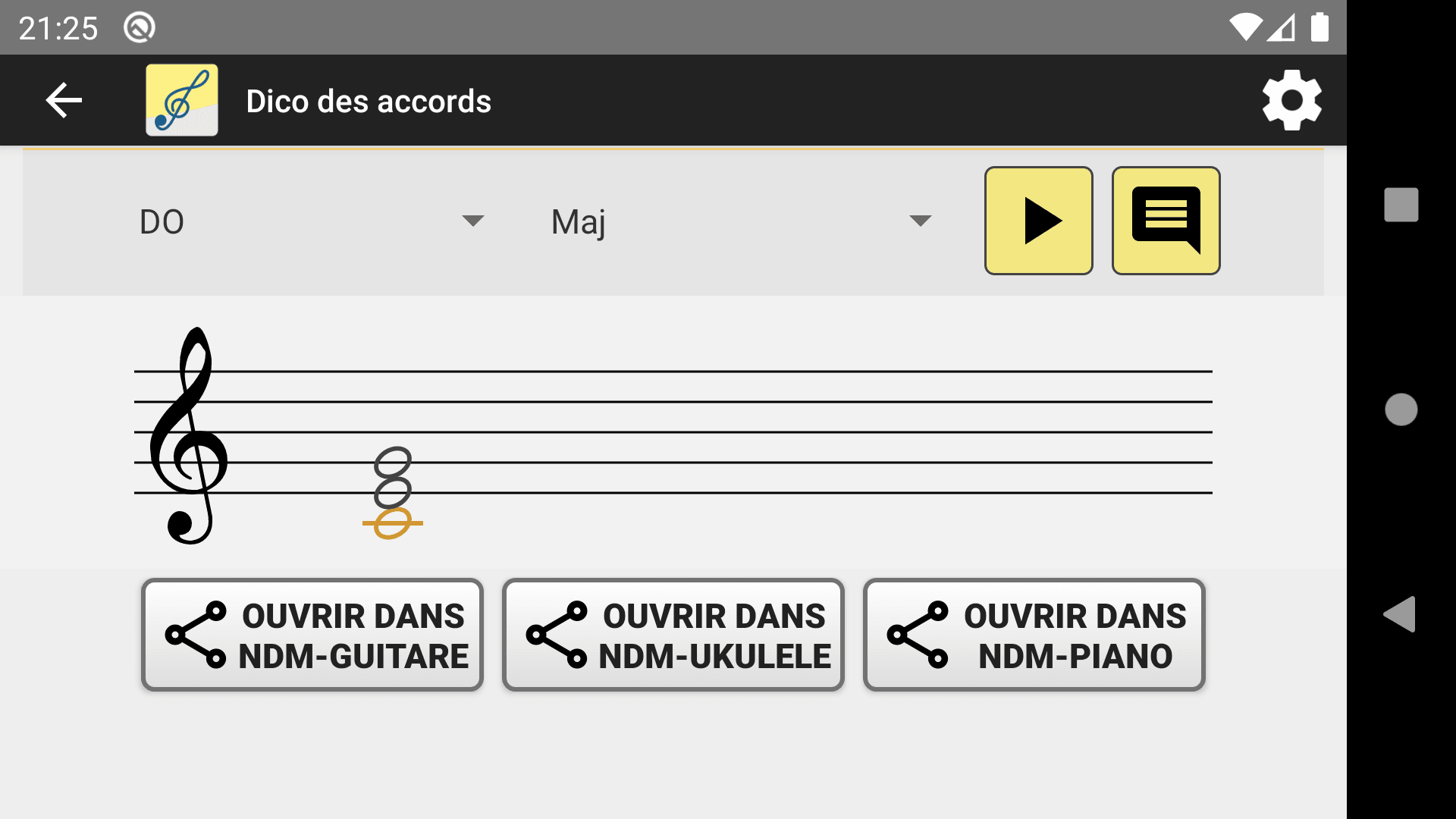
Apprenez à reconnaître les notes de musique et les accords sur une portée
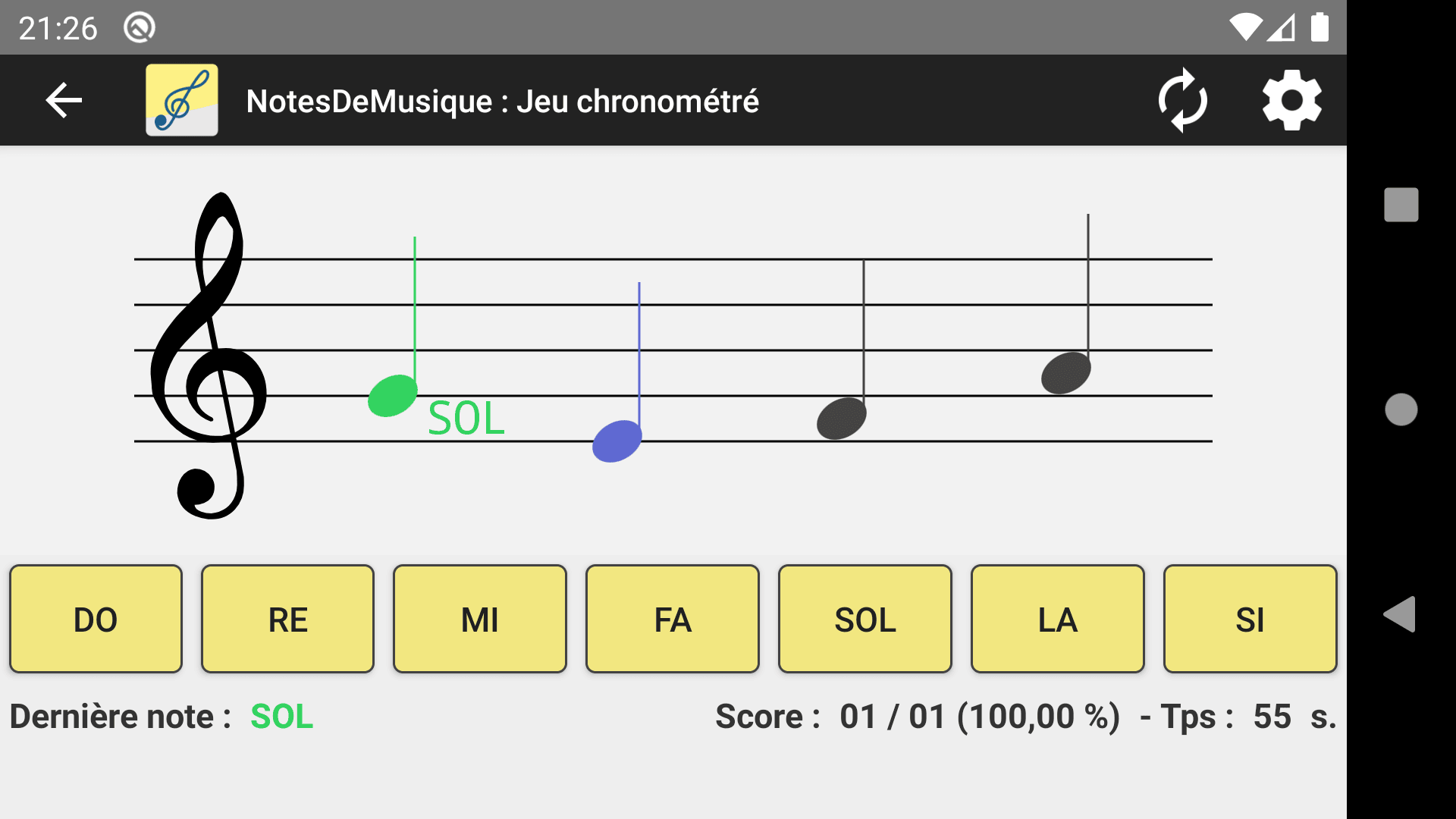
Entraînez votre oreille à reconnaître les différentes notes de musique
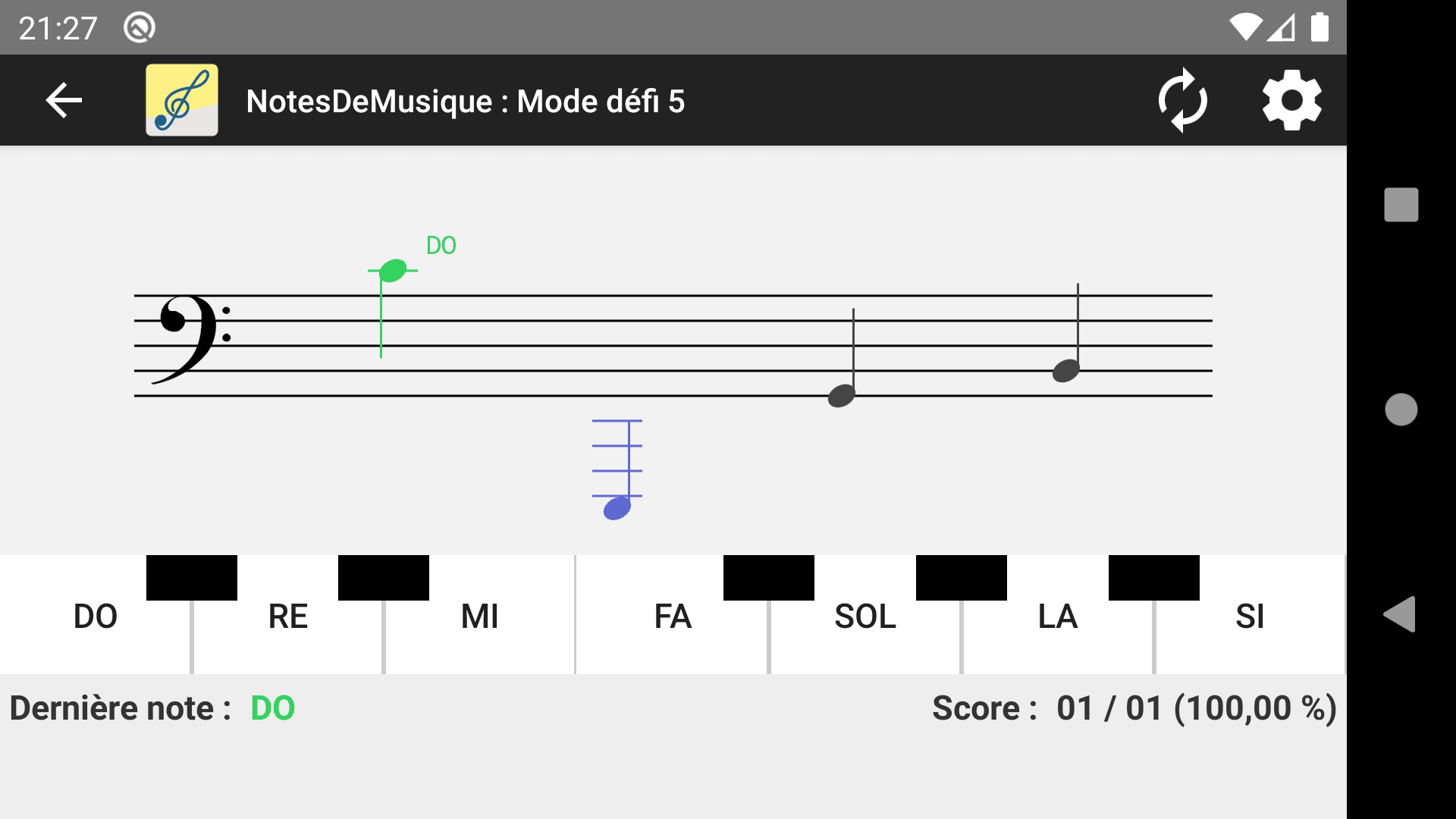
Battez vos propres scores dans différents modes de jeu
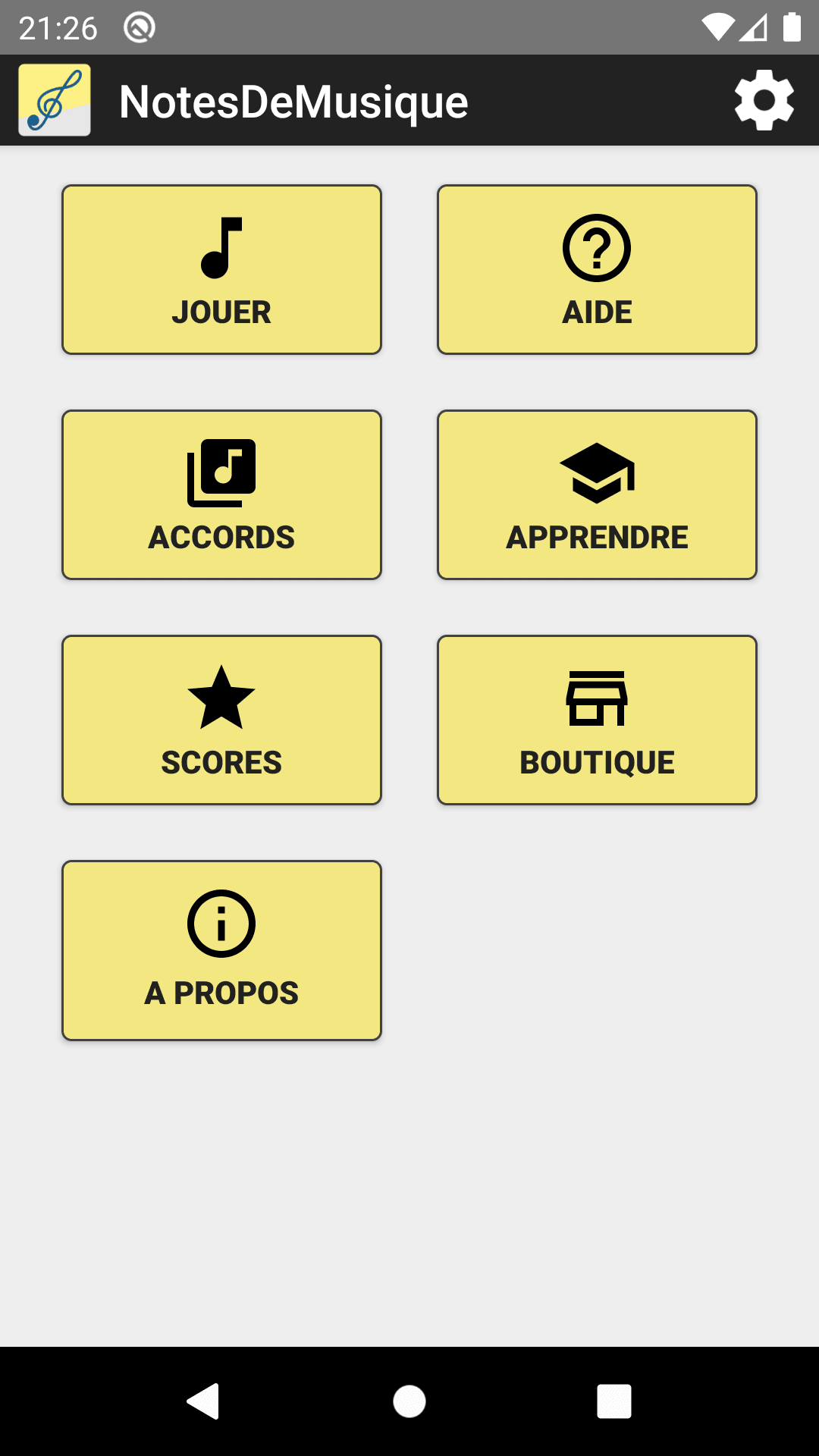
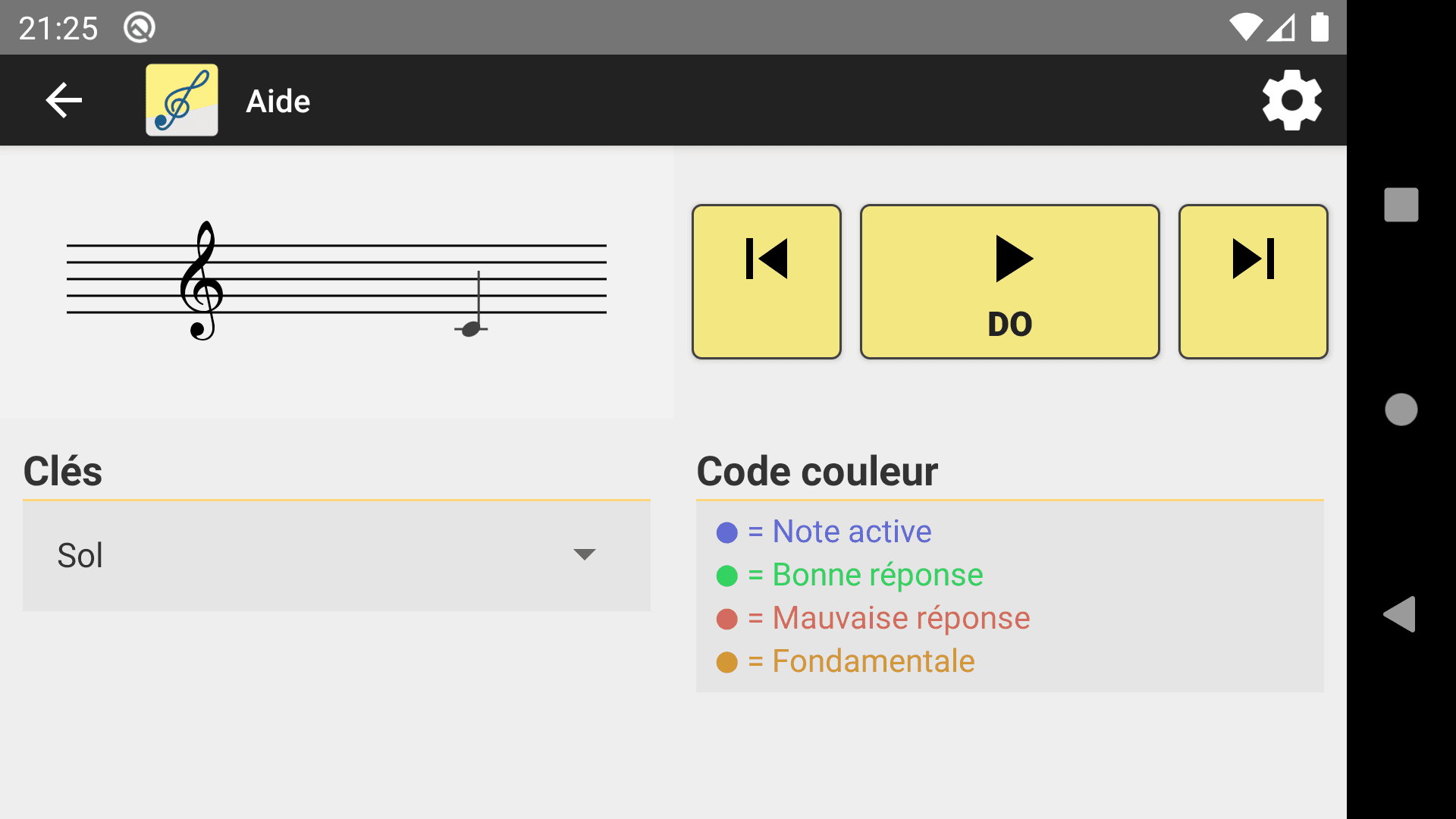
Naviguez dans la portée pour entendre le son et afficher le nom de la note
Choisissez une clé en particulier et un nombre d'octaves pour chaque jeu
Accédez à un dictionnaire des accords très pratique
Notes De Musique vous permet d'apprendre en vous amusant à lire les notes de musique sur une partition, développer votre oreille grâce aux dictées musicales et propose également de nombreuses fonctionnalités supplémentaires.
#Solfège #Partition #JeuEducatif
Scanner le QR Code

Télécharger pour Android
Oui, l'application est gratuite. Une boutique est présente pour vous proposer des options supplémentaires.
Vous pouvez changer le nom des notes en passant par le bouton de configuration situé en haut à gauche de l'écran.
Les scores sont automatiquement enregistrés et en fin de partie, le meilleur score est affiché. Le menu Scores vous permet d'afficher les scores par type et mode de jeux.
Oui, la boutique propose une option permettant de supprimer l'affichage des publicités.
In today's digital age, online communities have become an integral part of our lives. Social media platforms, forums, and chat rooms have made it easier for people to connect with each other, share their experiences, and engage in discussions on various topics. One such phenomenon that has gained significant attention in recent times is the concept of online interactions, particularly among young adults.
The rise of online communities has also raised concerns about mental health. Cyberbullying, online harassment, and the pressure to present a perfect online persona can take a toll on individuals' mental well-being. On the other hand, online communities can also provide a sense of belonging, support, and connection, which can be beneficial for people who struggle with social anxiety or feel isolated.
When engaging with online communities, it's essential to understand the context in which language is used. Online slang and colloquialisms can be highly nuanced, and their meanings can vary depending on the community, culture, and platform. What may seem like a harmless phrase to one person might be perceived as derogatory or insensitive by another. Therefore, it's crucial to approach online interactions with empathy, respect, and an open mind.
The internet has democratized the way we express ourselves, allowing individuals to share their thoughts, feelings, and opinions without fear of judgment. This freedom of expression has given rise to a plethora of online communities, where people can connect with like-minded individuals who share similar interests. However, this freedom also comes with its own set of challenges, such as cyberbullying, harassment, and the spread of misinformation.
The world of online communities is complex and multifaceted. As we continue to navigate this digital landscape, it's essential to approach online interactions with empathy, respect, and understanding. By doing so, we can foster positive and supportive communities that promote healthy discussions, meaningful connections, and a sense of belonging.
Online communities often develop their own unique language, which can be confusing for outsiders. Slang terms, colloquialisms, and idioms are commonly used to convey emotions, attitudes, and opinions. For instance, the phrase "saling mendesah cewek tocil bilang sedap banget wot" appears to be a casual expression in Indonesian, which roughly translates to "girls saying it's really delicious" in English. While it may seem nonsensical to some, this phrase is likely used to convey a sense of excitement or enthusiasm among online community members.
In today's digital age, online communities have become an integral part of our lives. Social media platforms, forums, and chat rooms have made it easier for people to connect with each other, share their experiences, and engage in discussions on various topics. One such phenomenon that has gained significant attention in recent times is the concept of online interactions, particularly among young adults.
The rise of online communities has also raised concerns about mental health. Cyberbullying, online harassment, and the pressure to present a perfect online persona can take a toll on individuals' mental well-being. On the other hand, online communities can also provide a sense of belonging, support, and connection, which can be beneficial for people who struggle with social anxiety or feel isolated. saling mendesah cewek tocil bilang sedap banget wot
When engaging with online communities, it's essential to understand the context in which language is used. Online slang and colloquialisms can be highly nuanced, and their meanings can vary depending on the community, culture, and platform. What may seem like a harmless phrase to one person might be perceived as derogatory or insensitive by another. Therefore, it's crucial to approach online interactions with empathy, respect, and an open mind. In today's digital age, online communities have become
The internet has democratized the way we express ourselves, allowing individuals to share their thoughts, feelings, and opinions without fear of judgment. This freedom of expression has given rise to a plethora of online communities, where people can connect with like-minded individuals who share similar interests. However, this freedom also comes with its own set of challenges, such as cyberbullying, harassment, and the spread of misinformation. The rise of online communities has also raised
The world of online communities is complex and multifaceted. As we continue to navigate this digital landscape, it's essential to approach online interactions with empathy, respect, and understanding. By doing so, we can foster positive and supportive communities that promote healthy discussions, meaningful connections, and a sense of belonging.
Online communities often develop their own unique language, which can be confusing for outsiders. Slang terms, colloquialisms, and idioms are commonly used to convey emotions, attitudes, and opinions. For instance, the phrase "saling mendesah cewek tocil bilang sedap banget wot" appears to be a casual expression in Indonesian, which roughly translates to "girls saying it's really delicious" in English. While it may seem nonsensical to some, this phrase is likely used to convey a sense of excitement or enthusiasm among online community members.
Si vous trouvez un bug ou si vous avez des idées d'améliorations concernant Notes De Musique, n'hésitez pas à me contacter !